Firm Registration in Solan
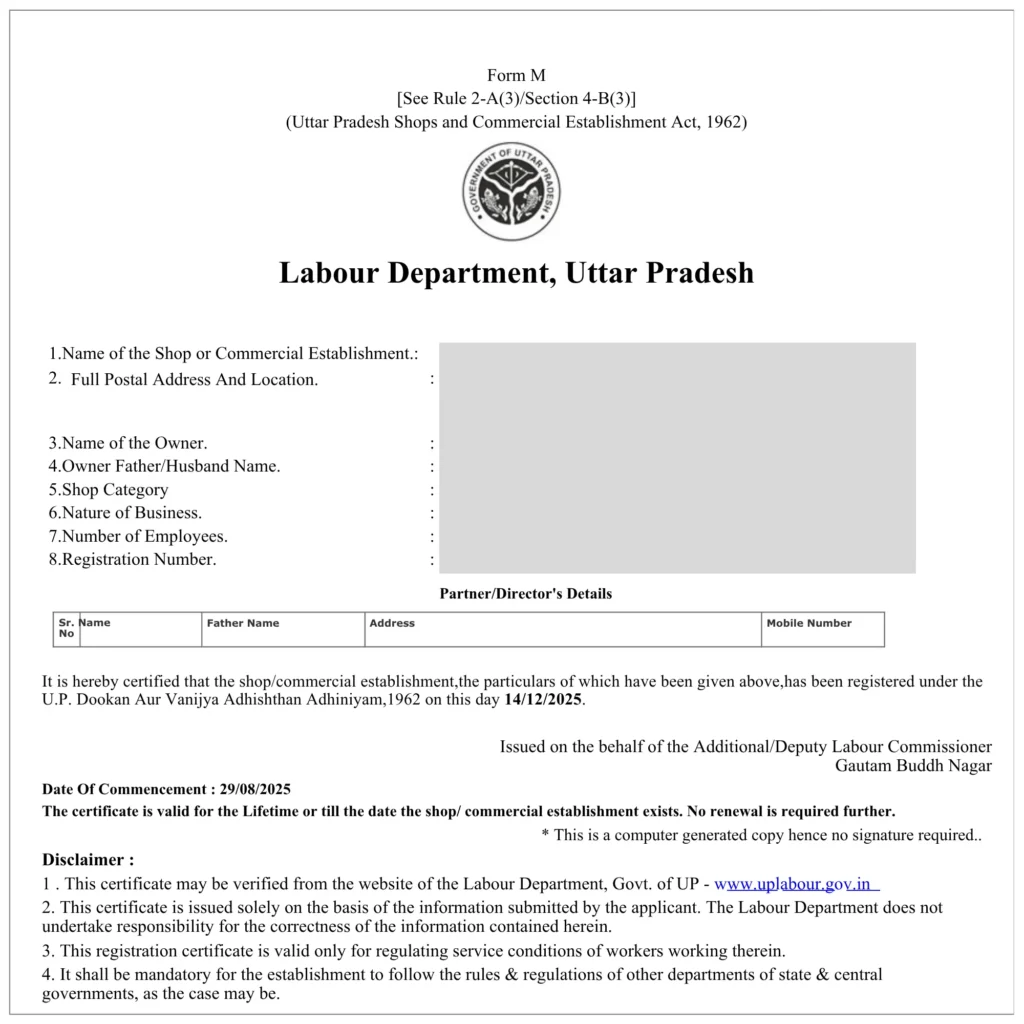
Firm registration is the process of legally registering a business with the relevant government authority to establish its identity and obtain formal recognition. In India, firm registration helps business owners operate their businesses with a proper legal structure and meet applicable regulatory requirements.
Firm registration is commonly associated with partnership firms, sole proprietorships, private limited companies and limited liability partnerships (LLPs). Each type has a different registration process, legal structure and documentation requirements.
What is Firm Registration?
Firm registration refers to the formal process of establishing a business under the applicable laws of India. It provides legal recognition to a business entity, depending on its chosen structure.
For example, when two or more individuals decide to start a business together, they may form a partnership firm by preparing a partnership deed and registering it with the Registrar of Firms in their state.
Types of firm registration
Sole Proprietorship Registration
A sole proprietorship firm is a type of business that is owned, managed and controlled by a single individual. It is one of the simplest and most common business structures in India, especially for small businesses, freelancers, consultants, traders and individual entrepreneurs.
In a sole proprietorship, the owner makes all major business decisions, manages daily operations and receives the profits generated by the business. The owner is also personally responsible for the firm’s debts, losses and liabilities.
Unlike a private limited company or an LLP, a sole proprietorship does not have a separate legal identity from its owner.
- Partnership Firm Registration
A business owned by two or more partners who agree to share profits and responsibilities. Registration is generally handled by the Registrar of Firms in the relevant state under the Indian Partnership Act, 1932.
- 3. Private Limited Company Registration
A company registered under the Companies Act, 2013, with a separate legal identity and limited liability for its shareholders. Registration is completed through the Ministry of Corporate Affairs (MCA).
- Limited Liability Partnership (LLP) Registration
A business structure that combines features of a partnership with limited liability protection for its partners. It is registered with the MCA.
Key Features of Proprietorship Firm
- Single Ownership: The business is owned and operated by one individual.
- Easy to Start: It generally involves fewer formalities than incorporating a company or registering an LLP.
- Complete Control: The proprietor has full authority over business decisions and operations.
- Profit Ownership: All business profits belong to the owner after applicable expenses and taxes.
- Unlimited Liability: The proprietor is personally responsible for business debts and liabilities.
- No Separate Legal Identity: The business and its owner are legally treated as the same person.
- Flexible Operations: The owner can manage and operate the business according to their requirements.
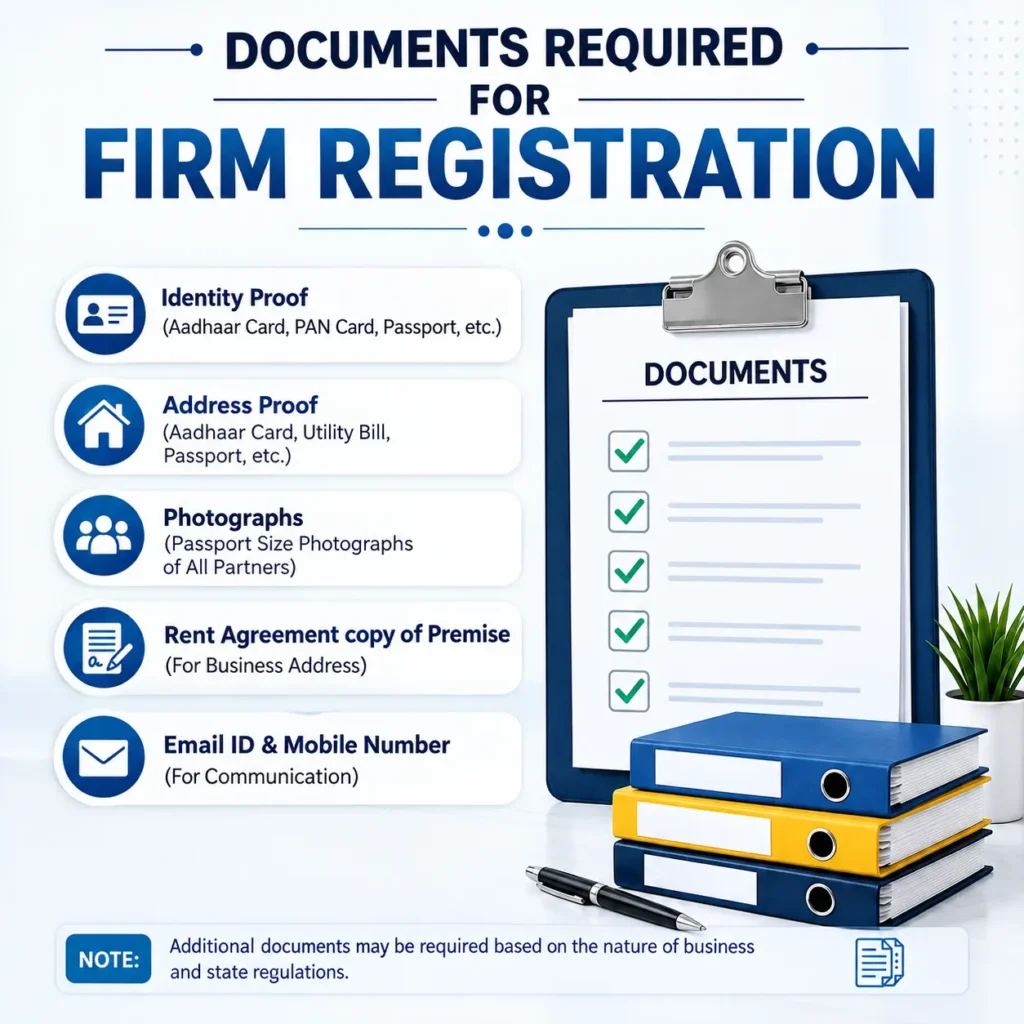
Documents Required forFirm Registration
Depending on the business structure and state, the documents may include:
- PAN card of the owner or partners.
- Aadhaar cards or other identity proofs.
- Address proof of the owner or partners.
- Business address proof.
- Rent agreement or ownership documents, where applicable.
- Partnership deed (for partnership firms).
- Passport-size photographs, where required.
- NOC from the property owner, if applicable.

Benefits of firm registration
- Legal recognition: Helps establish the business’s official identity. Registration reassures customers, suppliers, banks, and potential investors that the business is formally recognized and accountable
- market trust: Research on firms in emerging economies found that businesses registered at founding achieved better sales and employment outcomes than comparable informal firms
- Business bank account: Supports opening and operating a business current account, subject to bank requirements.
- Business credibility: Helps build trust with clients, suppliers and other businesses.
- Government registrations: Can facilitate applications for GST, licences and other applicable registrations.
- Business expansion: Provides a formal structure for growth and business operations.
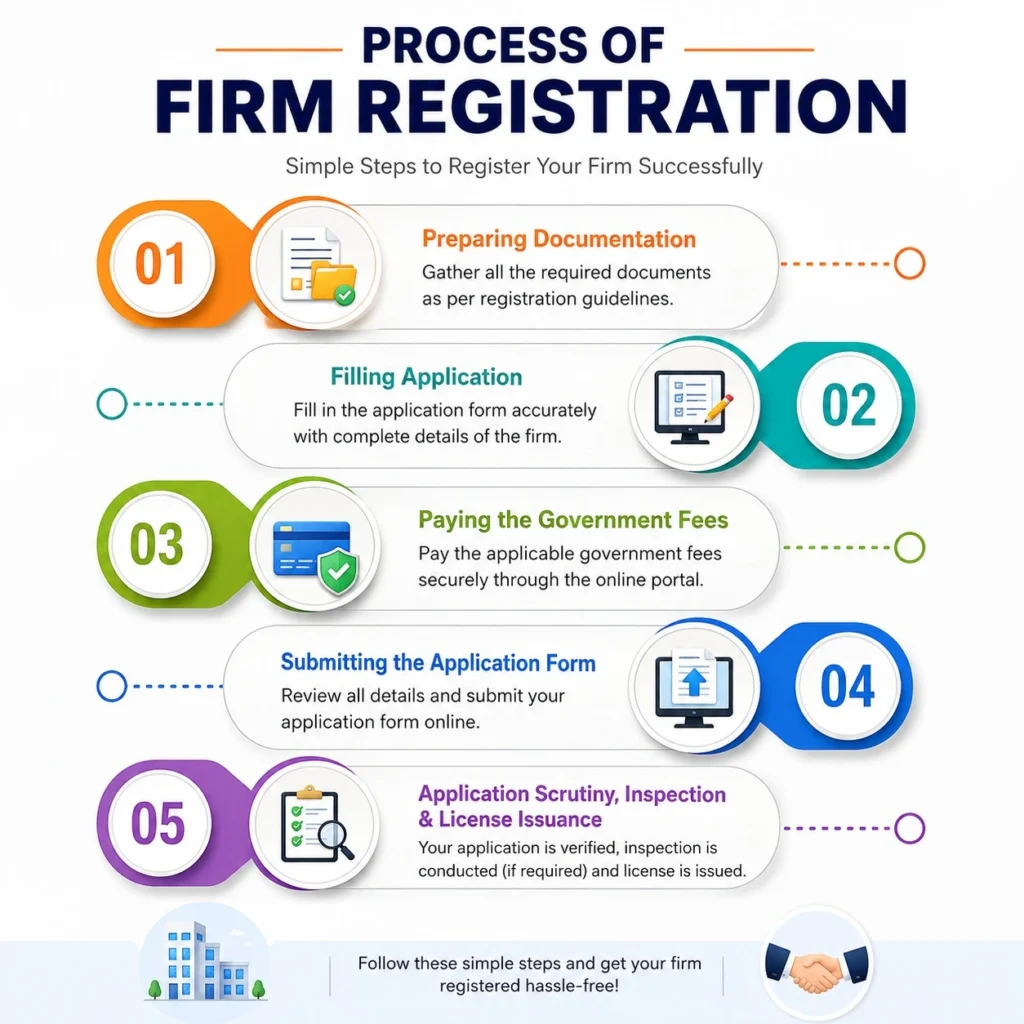
Process of Firm Registration