
How to Get Central FSSAI License: Process, Documents, Eligibility and Benefits
A Central FSSAI License is an important legal requirement for eligible food businesses operating on a large scale, importing food products, or conducting certain food-related activities that fall under the Central Licensing Authority. It helps businesses meet applicable food safety regulations and establish a reliable framework for handling, manufacturing, distributing, or trading food products.
For businesses planning to expand their operations across India or enter international markets, obtaining the appropriate FSSAI License is an essential compliance step. However, the type of license required depends on the nature of the business, its operational capacity, and the applicable eligibility criteria.
In this guide, we explain how to get a Central FSSAI License, who needs it, the documents required, the online application process, its benefits, and how Shugam Consultants can help businesses manage the application process.
What Is a Central FSSAI License?
A Central FSSAI License is a food business license issued by the Food Safety and Standards Authority of India (FSSAI) through the applicable Central Licensing Authority. It is required for food business operators who fall under the central licensing category specified in the relevant regulations.
Under Section 31 of the Food Safety and Standards Act, 2006, food business operators must obtain the applicable license or registration before carrying out regulated food business activities.
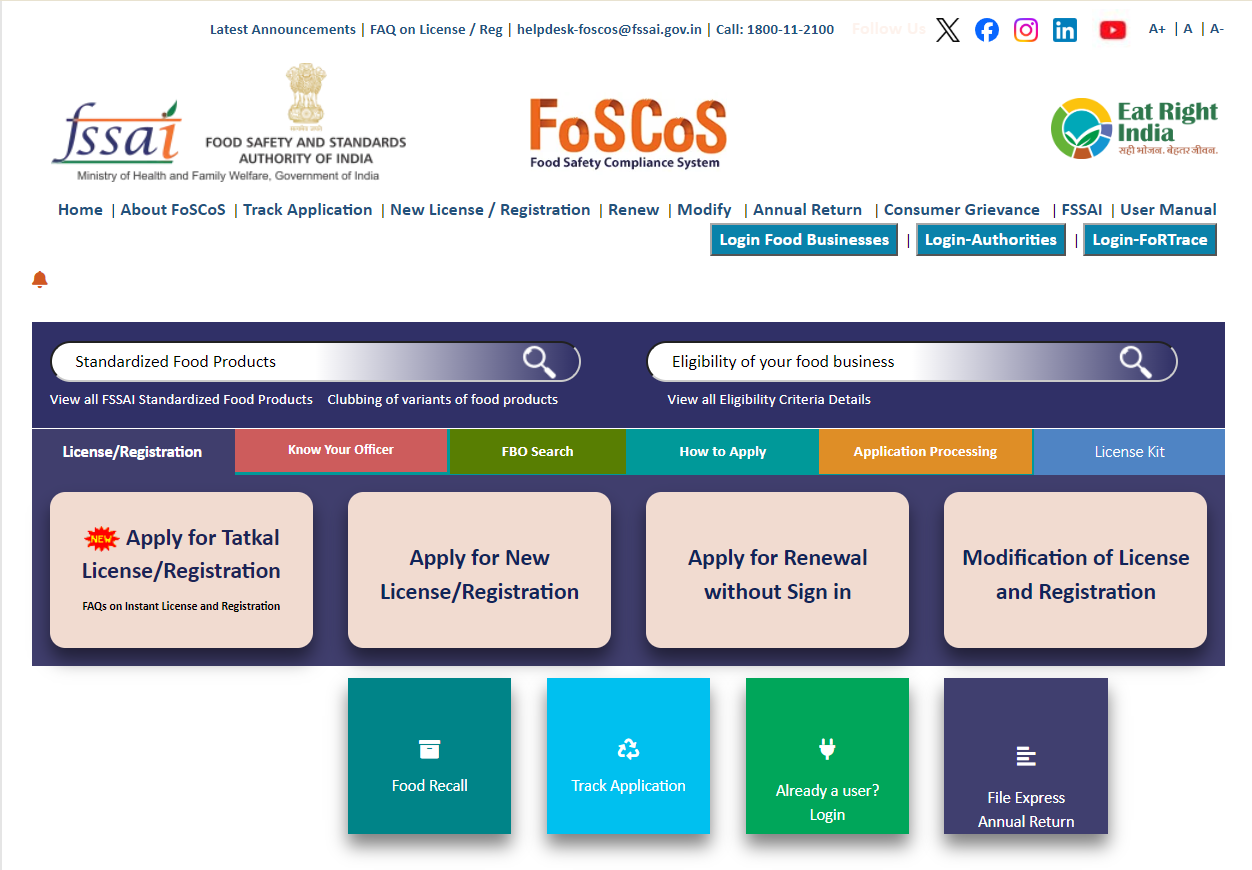
The Central FSSAI License is generally relevant to specified large-scale food manufacturers, importers, exporters and other eligible food businesses. Applications are submitted through the official Food Safety Compliance System (FoSCoS) portal.
Businesses should understand that a Central License is not automatically required for every food business with a high turnover. Eligibility must be checked against the applicable criteria for the particular kind of business and activity.
Who Needs a Central FSSAI License?
A Central FSSAI License may be required for the following categories of food businesses, depending on the applicable eligibility conditions:
- Food Importers
Businesses importing food products into India for commercial purposes generally need the appropriate Central FSSAI License. This applies to eligible importers handling packaged food, ingredients and other food products.
- Large-Scale Food Manufacturers
Manufacturing units that meet the prescribed central licensing criteria may need a Central License. These businesses may manufacture, process, package or handle food products on a substantial scale.
- Food Exporters
Food businesses involved in exporting products may require Central licensing where their activity falls under the relevant central category. Exporters should also check destination-country requirements and any additional approvals applicable to their products.
- Businesses Operating in Multiple States
A food business operating in more than one state may need a separate license for each eligible premises and an additional Central License for its head or registered office, as applicable. The exact requirement depends on the business structure and its activities.
- E-Commerce Food Businesses
Eligible e-commerce food business operators, including businesses involved in online food sales through applicable platform models, may fall under Central Licensing Authority requirements.
- Other Specified Food Business Operators
Certain businesses operating at airports, seaports, railway premises, central government establishments or in other specially regulated categories may also require central licensing, depending on their activity.
Important: Always verify your eligibility on the official FoSCoS portal before applying. The correct license category is determined by the relevant business activity and applicable eligibility criteria, not by turnover alone.
Benefits of Obtaining a Central FSSAI License
A Central FSSAI License offers several practical advantages for eligible food businesses.
- Regulatory Compliance
The license helps businesses meet applicable food safety licensing requirements. Operating with the appropriate license reduces the risk of regulatory action arising from carrying out a licensed activity without the required authorization.
- Better Business Credibility
A valid license demonstrates that the business has completed the applicable licensing process. This can help build confidence among distributors, institutional buyers, suppliers and other business partners.
- Support for Business Expansion
Businesses planning to expand their operations, enter new markets or establish additional business locations can benefit from having the correct licensing structure in place.
- Support for Import and Export Activities
For eligible importers and exporters, the appropriate FSSAI License forms an important part of food regulatory compliance. It should be maintained alongside other applicable trade documents, customs requirements and product-specific approvals.
- Improved Food Safety Management
The licensing process encourages businesses to review their facilities, food handling practices, documentation and applicable hygiene requirements. These measures can contribute to more consistent operational standards.
- Easier Compliance Documentation
Maintaining an appropriate license and associated records helps businesses organize important regulatory information for inspections, business transactions and future license modifications or renewals.
Documents Required for a Central FSSAI License
The documents required depend on the kind of food business, its activities and the applicable licensing category. Applicants should use the official FoSCoS document checklist for their specific business.
Commonly required documents may include:
- Form B: The prescribed application form, duly completed and signed by the proprietor, partner or authorized signatory.
- Business constitution documents: Partnership deed, certificate of incorporation or other relevant proof of business constitution, as applicable.
- Identity and address proof: Documents for the proprietor, partners, directors or authorized signatory, as applicable.
- Premises proof: Ownership documents, rent agreement, lease documents or other acceptable proof of possession of the business premises.
- Layout plan: A layout or blueprint showing dimensions and area allocation, particularly for manufacturing and processing units.
- Machinery and equipment details: Information about equipment, installed capacity and horsepower, where applicable to manufacturing and processing activities.
- Food product details: A list of the food products or categories intended to be manufactured, processed or handled, where required.
- Import Export Code (IEC): Relevant IEC documentation for eligible importers and other businesses where required.
- Turnover or capacity proof: Supporting documents establishing turnover, production capacity or other eligibility parameters, where applicable.
- Company authorization: Details of directors or partners and the prescribed authorization or nomination documents, where applicable.
- Additional category-specific documents: Other certificates, declarations, NOCs or approvals required for the particular business activity.
The list above is indicative rather than universal. Not every applicant needs every document, and additional documents may be requested during application scrutiny.
How to Get a Central FSSAI License Online
The Central FSSAI License application process is completed through the official FoSCoS portal. Follow these steps to prepare and submit an application.
Step 1: Check Your Eligibility
First, identify the exact nature of your food business. Determine whether your activity falls under the Central Licensing Authority and check the applicable eligibility criteria.
Review factors such as the kind of business, production capacity, premises, import or export activities and operational structure.
Step 2: Visit the Official FoSCoS Portal
Visit the Food Safety Compliance System website at https://foscos.fssai.gov.in.
Select the option for applying for a new license or registration and follow the portal instructions for your business category.
Step 3: Select the Correct Business Category
Choose the appropriate state or premises location and the relevant kind of business. For example, an importer and a food manufacturer may have different eligibility conditions and documentation requirements.
Selecting the correct category is essential because it determines the applicable document checklist and licensing procedure.
Step 4: Prepare the Required Documents
Collect the relevant business, identity, premises and activity-specific documents. Manufacturing units should pay particular attention to layout plans, equipment details, product categories and applicable technical requirements.
Check that the information in the application matches the supporting documents.
Step 5: Complete and Submit the Application
Fill out the prescribed application form, generally Form B for a license application, wherever applicable. Enter the required business details, upload the documents and review the information before submission.
Pay the applicable application or licensing fee as instructed by the portal and retain the application reference number.
Step 6: Respond to Queries or Inspection Requirements
The licensing authority may scrutinize the application, request additional information or require an inspection, depending on the business category and circumstances.
Respond to any clarification requests within the prescribed timeline. If an inspection is required, ensure that the premises and applicable food safety arrangements are ready for assessment.
Step 7: Receive and Verify the License
If the application is approved, the license is issued through the applicable process. Verify the business name, premises address, license category, validity and endorsed food business activities.
The business should operate only within the scope of the license and comply with its applicable conditions.
Central FSSAI License Fees and Validity
The official FoSCoS fee schedule lists the Central License fee at ₹7,500 per year for new applications, renewals and modifications under the displayed Central License fee category.
Applicants can generally apply for a license for a period of one to five years, subject to the applicable rules and portal requirements. The total license fee depends on the selected validity period and the applicable fee provisions.
Keep the following points in mind:
- Verify the applicable fee on FoSCoS before submitting the application.
- Government fees and professional consultancy charges, if any, are separate.
- Renewal should be completed within the prescribed period to avoid interruption or penalties.
- Additional requirements may apply to specific business categories.
For the latest fee information, visit the official FoSCoS Central License fee page.
Common Mistakes to Avoid During Application
Applicants can reduce delays by checking the following points before submitting their application:
- Applying under the wrong kind of business or license category.
- Uploading incomplete, unclear or inconsistent documents.
- Providing incorrect premises details or business information.
- Omitting applicable food products from the license application.
- Failing to respond to clarification requests within the prescribed timeline.
- Overlooking license conditions, modification requirements or renewal dates.
A document checklist prepared specifically for the business category can help identify gaps before submission.
Why Choose Shugam Consultants for a Central FSSAI License?
Applying for a Central FSSAI License can involve multiple documents, eligibility checks and regulatory requirements. Shugam Consultants helps businesses organize the application process and understand the compliance steps relevant to their activities.
Eligibility Guidance
The team can help review the business activity and identify the applicable licensing category before the application is prepared.
Documentation Assistance
Support may include organizing business documents, checking application information and identifying missing or inconsistent details.
Application Filing Support
Shugam Consultants can assist with preparing the application, uploading relevant documents and following the applicable submission procedure.
Application Status and Query Support
If the licensing authority raises a query, assistance with understanding the request and organizing a response can help the applicant address it appropriately.
Renewal and Modification Guidance
Businesses can also seek assistance with understanding renewal timelines and changes that may require modification of their existing license.
The scope of assistance depends on the services agreed with the consultant. Final approval remains with the competent licensing authority, and no consultant can guarantee approval.
Conclusion
Getting a Central FSSAI License begins with identifying the correct business category, checking the eligibility criteria and preparing the required documents. Applicants must then submit the application through the official FoSCoS portal, pay the applicable fees and respond to any requests from the licensing authority.
For eligible food manufacturers, importers, exporters and other regulated food businesses, maintaining the correct license is an important part of lawful operations and long-term business planning.
Shugam Consultants can help businesses understand the licensing requirements, organize documentation and navigate the application process with greater clarity. Before applying, verify the current requirements through the official FSSAI and FoSCoS resources.
Need assistance with a Central FSSAI License? Contact Shugam Consultants to discuss your business activity, eligibility and documentation requirements.
Website: www.shugam.com
Email: info@shugam.com
Phone: +91 7303071797
Leave a Comment
Have a question or suggestion? Share your thoughts below.