Shugam Best FSSAI License Consultant

Documents

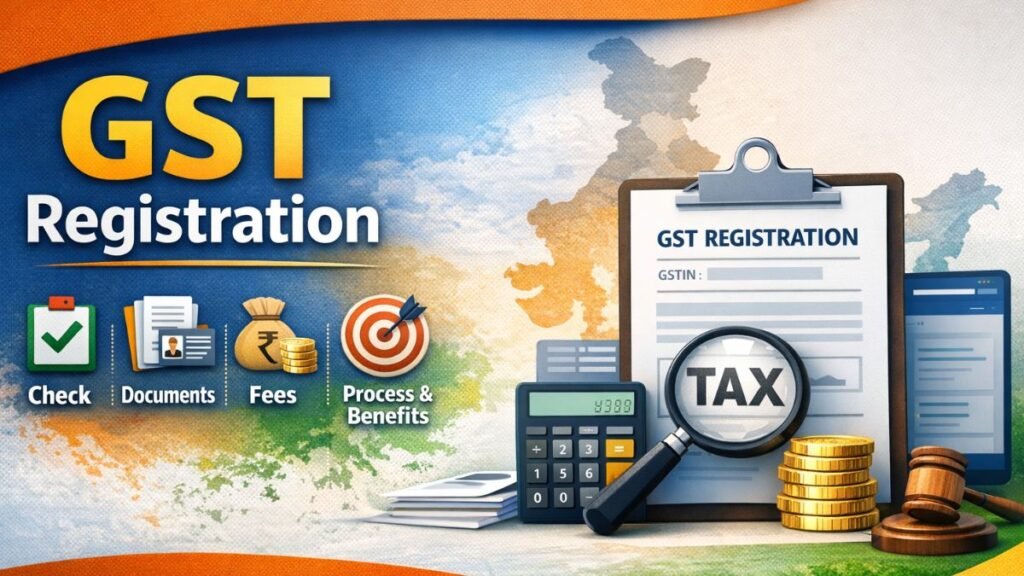
GST Registration | Check, Documents, Fees, Process & Benefits
Blogs

GST Registration | Check, Documents, Fees, Process & Benefits

GST Registration: Imagine running a business smoothly—customers are happy, sales are growing, and everything looks perfect. Then suddenly, a client asks, “Do you have a GST number?” That one question can pause your entire deal. This is where GST Registration becomes important. Whether you’re a small business owner, freelancer, or running a growing company, GST is not just a legal formality—it’s a business necessity. In this guide, we’ll break everything down in simple terms so you understand what GST registration is, why it matters, and how you can get it without stress. What is GST Registration? GST Registration is the process by which a business gets registered under the Goods and Services Tax system in India. It is regulated by the Goods and Services Tax Network, which manages the entire GST portal and compliance system. Once registered, you receive a GSTIN (Goods and Services Tax Identification Number)—a unique 15-digit number used for tax filing, invoicing, and compliance. In simple words, GST registration makes your business officially recognized under India’s indirect tax system. Why is GST Registration Important? GST registration is not just about paying taxes—it plays a key role in business growth and credibility. 1. Legal Requirement If your business crosses the prescribed turnover limit or falls under specific categories, GST registration becomes mandatory. Non-compliance can lead to penalties. 2. Input Tax Credit (ITC) Registered businesses can claim tax paid on purchases. This reduces your overall tax burden. 3. Business Expansion Many companies prefer working only with GST-registered vendors. Without it, you may lose big opportunities. 4. Builds Trust A GST number adds credibility. Customers and clients see your business as more professional and reliable. 5. Sell Online Easily E-commerce platforms often require GST registration to list products. Who Needs GST Registration? Not every business needs GST immediately, but many do. Here’s a simple breakdown: Businesses exceeding the turnover threshold (as per GST law) E-commerce sellers Service providers working across states Businesses involved in inter-state supply Freelancers and consultants (in certain cases) Import-export businesses Casual taxable persons If you fall into any of these categories, GST registration is likely mandatory. Types of GST Registration GST registration is not “one-size-fits-all.” Different business types require different registration categories. 1. Regular GST Registration For most businesses operating normally. 2. Composition Scheme For small businesses that want simpler compliance and lower tax rates. However, they cannot claim input tax credit. 3. Casual Taxable Person For businesses operating temporarily in different states (like exhibitions or seasonal stalls). 4. Non-Resident Taxable Person For individuals or businesses based outside India but supplying goods/services in India. Choosing the right type matters, as it affects your tax liability and compliance requirements. Documents Required for GST Registration You don’t need a mountain of paperwork, but accuracy is crucial. Here’s what you typically need: PAN Card of the business or individual Aadhaar Card Business registration proof (if applicable) Address proof of business location Bank account details (cancelled cheque or statement) Passport-size photograph Digital Signature (for companies/LLPs) Make sure all documents match your business details. Even small mismatches can delay approval. GST Registration Fees & Validity Fees The government does not charge any fee for GST registration. However, you may incur professional fees if you take help from consultants or service providers. Validity Regular GST registration does not expire as long as compliance is maintained Casual registrations have a limited validity period Late filing of returns or inactivity may lead to cancellation, so regular compliance is important. Step-by-Step GST Registration Process The GST registration process is fully online and user-friendly—at least in theory. Let’s simplify it. Step 1: Visit the GST Portal Go to the official GST website managed by the GST Network. Step 2: Fill Basic Details Enter your PAN, mobile number, and email ID. Step 3: Verify OTP You’ll receive OTPs for verification. Step 4: Complete Application Fill in business details like address, bank info, and business activity. Step 5: Upload Documents Upload all required documents carefully. Step 6: Submit Application After submission, you’ll receive an ARN (Application Reference Number). Step 7: Verification The department may verify your details. Step 8: GSTIN Allotted Once approved, your GST number is issued. Simple steps—but in reality, small errors can slow things down. That’s where expert help can save time. Benefits of GST Registration GST registration offers more than just compliance—it unlocks growth opportunities. 1. Input Tax Credit Reduce your tax burden by claiming ITC on purchases. 2. Nationwide Business Sell across India without complex tax structures. 3. Improved Credibility A GST number makes your business look trustworthy. 4. Easier Loans & Funding Financial institutions prefer GST-compliant businesses. 5. Seamless Online Selling Mandatory for most e-commerce platforms. 6. Better Record Keeping GST encourages structured accounting and transparency. Common Mistakes to Avoid Even simple mistakes can create big problems. Here are some common ones: 1. Wrong Business Details Entering incorrect PAN or address can lead to rejection. 2. Choosing the Wrong Scheme Opting for the composition scheme without understanding limitations can hurt your business. 3. Ignoring Compliance Getting GST is easy. Maintaining it is the real challenge. 4. Late Filing Delays in return filing can attract penalties. 5. DIY Without Knowledge Trying to do everything yourself without understanding GST rules can backfire. A little caution here can save you a lot of headaches later. How Shugam Consultant Can Help GST registration looks simple, but practical challenges often arise—technical errors, document mismatches, or confusion about the right category. That’s where Shugam Consultant can support you. Instead of struggling with forms and compliance, you can: Get expert guidance on eligibility Choose the right GST category Avoid application errors Ensure quick and smooth registration Receive ongoing compliance support The goal is simple—save your time and keep your business compliant without stress. Conclusion GST registration is not just a legal step—it’s a smart business move. It helps you stay compliant, build trust, and grow your business without barriers. Whether you’re just starting out or scaling up, having a GST number puts you on the right track. If

, , ,

GST Registration | Check, Documents, Fees, Process & Benefits Read Post »
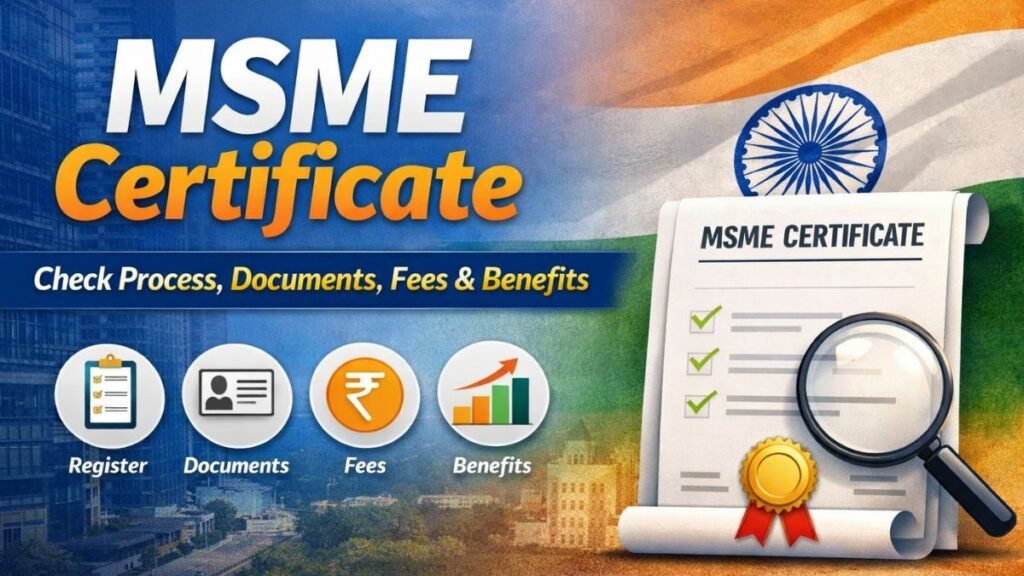
MSME Certificate | Check Process, Documents, Fees & Benefits
Blogs

MSME Certificate | Check Process, Documents, Fees & Benefits

MSME Certificate: Starting a business in India is exciting—but let’s be honest, paperwork can feel like a full-time job. Imagine you’ve just launched a small manufacturing unit or a digital marketing agency. Orders are coming in, but when you try to apply for loans, subsidies, or government schemes… You hit a wall. That’s where an MSME Certificate becomes your business’s best friend. In this guide, you’ll understand everything about MSME registration (also known as Udyam Registration)—in a simple, practical, and no-nonsense way. What is an MSME Certificate? An MSME Certificate is an official recognition given to small and medium businesses under the Ministry of Micro, Small & Medium Enterprises via the Ministry of Micro, Small and Medium Enterprises. It is issued through the online Udyam Registration Portal, making your business legally recognized as a Micro, Small, or Medium Enterprise (MSME). Earlier, it was called Udyog Aadhaar. Today, everything runs under the Udyam system. In simple words: It’s your business identity in the government ecosystem. Why is MSME Certificate Important? Let’s break it down logically. 1. Legal Recognition Without MSME registration, your business is just “another business.”With it, you become a recognized entity eligible for government benefits. 2. Easier Access to Loans Banks and NBFCs often prefer MSMEs because: Lower risk perception Priority sector lending norms Faster approvals This means better chances of getting funding when you actually need it. 3. Government Benefits & Schemes Registered MSMEs can access schemes related to: Subsidies Credit guarantee Technology upgrades Skill development These are introduced under policies governed by the Government of India. 4. Protection Against Delayed Payments Late payments can kill cash flow. MSME-registered businesses get legal protection under the MSME Development Act—buyers must pay within a defined time frame. 5. Business Credibility Let’s face it—clients trust registered businesses more. An MSME certificate: Improves brand credibility Helps in tenders and contracts Builds trust with vendors Who Needs MSME Certificate? Not every business must register—but many should. Here’s who benefits the most: Small manufacturers Traders and wholesalers Service providers (consultants, agencies, freelancers) Startups and home-based businesses Exporters and importers E-commerce sellers If your business falls under MSME investment and turnover limits, you’re eligible. Types of MSMEs in India MSMEs are classified based on investment in plant & machinery and annual turnover. 1. Micro Enterprise Small investment Low turnover Ideal for startups and freelancers 2. Small Enterprise Moderate investment Growing businesses 3. Medium Enterprise Larger operations Higher turnover bracket These classifications are defined by the government and updated from time to time. Documents Required for MSME Registration The best part? Minimal paperwork. You typically need: Aadhaar number of the business owner PAN card Business name and address Bank account details Business activity details (manufacturing/service) No heavy documentation, no long queues. MSME Registration Fees & Validity Fees Government registration is free of cost Service providers or consultants may charge a professional fee Validity MSME (Udyam) registration is lifetime valid No renewal required Once registered, you’re good to go—unless major business changes occur. Step-by-Step MSME Registration Process Let’s keep it simple and practical. 1: Visit the Official Portal Go to the Udyam Registration website. 2: Enter Aadhaar Details Owner’s Aadhaar is mandatory OTP verification will be done 3: Fill Business Information Name of business Type of organization Address and bank details 4: Enter Investment & Turnover Provide approximate figures. Don’t stress—these are self-declared initially. 5: Submit Application Review details Submit form Step 6: Get MSME Certificate You’ll receive your Udyam Registration Number (URN) and certificate. Benefits of MSME Certificate Now comes the part everyone cares about—what’s in it for you? 1. Easy Business Loans Banks offer: Lower interest rates Collateral-free loans under schemes 2. Subsidies & Incentives You may get support for: Patent registration ISO certification Technology upgrades 3. Tax & Compliance Benefits Certain exemptions and easier compliance processes apply to MSMEs. 4. Priority in Government Tenders MSMEs often receive: Tender fee exemptions Relaxed eligibility criteria 5. Protection from Payment Delays You can legally claim interest on delayed payments. A lifesaver for small businesses. 6. Market Expansion Support Government programs help MSMEs: Enter global markets Participate in trade fairs Common Mistakes to Avoid Even though the process is simple, people still mess it up. Let’s save you from that 1. Entering Incorrect Aadhaar or PAN This can delay or reject your application. 2. Wrong Business Classification Choosing “manufacturing” instead of “service” can create issues later. 3. Overestimating Investment Don’t inflate numbers thinking it looks impressive—it may push you into the wrong category. 4. Ignoring Updates If your business grows significantly, update your details. 5. Using Unreliable Agents Not all consultants are experts. Choose wisely. How Shugam Consultant Can Help Let’s be practical—while the process is online, many business owners still prefer expert help. That’s where Shugam Consultant steps in. Instead of struggling with: Confusing forms Technical errors Incorrect classification You get: Accurate registration Proper guidance based on your business type Quick processing without stress It’s not about “getting a certificate.”It’s about doing it right the first time. Conclusion An MSME Certificate is more than just a document—it’s a growth tool. It helps your business: Gain recognition Access funding Build trust Stay legally protected If you’re running a small or medium-sized business and haven’t registered yet, you’re likely missing out on real opportunities. The good news?The process is simple, quick, and completely worth it. Trusted Sources & References 1. Official MSME / Udyam Registration Portal Ministry of Micro, Small and Medium Enterprises Official Portal: Udyam Registration

, ,

MSME Certificate | Check Process, Documents, Fees & Benefits Read Post »

APEDA Registration | Check Process, Documents, Fees & Benefits.
Blogs

APEDA Registration | Check Process, Documents, Fees & Benefits.

Imagine you’ve finally found an international buyer for your mangoes, spices, or processed food products. Exciting, right? But just when you’re ready to ship, someone asks, “Do you have APEDA registration?” That’s where many businesses pause. If you’re planning to export agricultural or food products from India, APEDA registration is not optional—it’s essential. Without it, your export dreams may remain stuck at the border (literally). In this guide, we’ll break down everything about APEDA registration in simple terms—what it is, why it matters, and how you can get it without confusion. What is APEDA Registration? APEDA registration refers to the mandatory registration with the Agricultural and Processed Food Products Export Development Authority. APEDA operates under the Ministry of Commerce and Industry, Government of India. It was established to promote and regulate the export of agricultural and processed food products. Once you register, you receive a Registration-Cum-Membership Certificate (RCMC). This certificate allows you to legally export APEDA-scheduled products. Why is APEDA Registration Important? Let’s keep it practical. 1. Legal Requirement If your business deals with products listed under APEDA, registration is mandatory. Without it, export activities can face restrictions. 2. Export Promotion Benefits Registered exporters can access government schemes, subsidies, and financial assistance for market development. 3. Global Market Access APEDA helps businesses connect with international buyers and participate in global trade fairs. 4. Quality Standards Support APEDA promotes quality compliance, packaging standards, and certifications required for international markets. 5. Builds Trust Having APEDA registration increases credibility with buyers, banks, and government authorities. Think of it as your “passport” for exporting agricultural products. Who Needs APEDA Registration? Not every business needs it—but if you fall into any of these categories, you probably do: Exporters of fruits and vegetables Exporters of meat and poultry products Dairy product exporters Processed food manufacturers Organic product exporters Floriculture businesses Grain and cereal exporters In short, if your product is listed under APEDA’s scheduled items, registration is required. Types of APEDA Products Covered APEDA doesn’t register businesses randomly—it focuses on specific product categories. Major Categories Include: Fruits and vegetables Meat and meat products Poultry products Dairy products Confectionery and bakery items Honey and jaggery Cereals and cereal products Organic food products If your business falls under any of these, APEDA registration becomes relevant. Documents Required for APEDA Registration The documentation process is simple, but accuracy matters. Here’s what you typically need: Import Export Code (IEC) issued by DGFT PAN card of the business Bank account details and cancelled cheque Business registration proof (GST, company registration, etc.) Address proof of business premises Digital signature (for online application) Pro tip: Make sure your IEC and PAN details match perfectly. Even a small mismatch can delay approval. Fees & Validity Fees APEDA charges a one-time registration fee. The amount is fixed by the authority and may change over time, so always check the official portal for the latest details. Validity Good news—APEDA registration is lifetime valid. Yes, you read that right. Once approved, you don’t need to renew it every year. That’s one less compliance headache. Step-by-Step Process for APEDA Registration Let’s simplify the process so even a beginner can follow it: Step 1: Visit the APEDA Portal Go to the official APEDA website and navigate to the registration section. Step 2: Create Login Credentials Register using your email ID and mobile number. Step 3: Fill Application Form Enter details like: Business information IEC details Bank details Step 4: Upload Documents Upload scanned copies of the required documents. Step 5: Pay Fees Make the online payment through the portal. Step 6: Verification APEDA reviews your application. Step 7: Get RCMC Certificate Once approved, you receive your Registration-Cum-Membership Certificate. That’s it—you’re officially ready to export! Benefits of APEDA Registration Let’s go beyond compliance and talk about real advantages. 1. Financial Assistance APEDA offers schemes for: Infrastructure development Quality improvement Market promotion 2. Export Guidance You get access to export data, trends, and advisory support. 3. Brand Promotion APEDA helps promote Indian products globally through exhibitions and trade fairs. 4. Quality Certification Support Guidance for certifications like HACCP, ISO, and organic standards. 5. Better Market Reach Registered exporters get visibility in international markets. Simply put, APEDA doesn’t just regulate—it actively helps you grow. Common Mistakes to Avoid Even simple processes can go wrong if you’re not careful. 1. Incorrect IEC Details Mismatch between IEC and PAN is one of the most common reasons for rejection. 2. Poor Document Quality Blurry or incomplete uploads can delay approval. 3. Ignoring Product Eligibility Some businesses apply without checking if their product falls under APEDA. 4. Wrong Bank Details Payment or verification issues may arise due to incorrect bank information. 5. Last-Minute Application Waiting until you get an export order is risky. Apply early. Once you understand the process, the next step is applying correctly without delays. If you want a faster and hassle-free way to apply, check out our detailed guide on how to get your APEDA certificate quickly. How Shugam Consultant Can Help Let’s be honest—government processes can feel overwhelming, especially when you’re focused on running a business. That’s where professional support makes a difference. At Shugam Consultant, the goal is simple: Simplify documentation Ensure error-free application Save your time Provide end-to-end support Instead of going back and forth with corrections, you can focus on growing your export business while experts handle the compliance part. No confusion—just smooth registration. Conclusion APEDA registration is more than just a legal requirement—it’s a gateway to global opportunities. If you plan to export agricultural or processed food products, this certification helps you: Stay compliant Build trust Access government benefits Expand internationally The process is straightforward, but attention to detail is key. So, whether you’re a small business owner or an established exporter, getting your APEDA registration done early is a smart move. Because when opportunity knocks from overseas, you don’t want paperwork to hold you back. Trusted Sources 1. Official FSSAI Website Food Safety and Standards Authority of India 2. FSSAI License & Registration Portal (FoSCoS)

, ,

APEDA Registration | Check Process, Documents, Fees & Benefits. Read Post »

FSSAI License in Gurgaon | Check, Documents, Fees & Process.
Blogs

FSSAI License in Gurgaon | Check, Documents, Fees & Process.

FSSAI License in Gurgaon: Imagine opening a cloud kitchen in Gurgaon, listing your food on Zomato, and getting your first few orders. Exciting, right? But suddenly, the platform asks for your FSSAI license. Or worse, a food inspector visits and asks for compliance documents. This is where many food business owners get stuck. Getting an FSSAI License in Gurgaon is not just a legal formality—it’s your business identity in the food industry. Whether you run a small home kitchen or a large restaurant, this license keeps you compliant, builds trust, and helps you grow without fear. Let’s break everything down in a simple, practical way. What is FSSAI License? An FSSAI License is a mandatory registration issued by the Food Safety and Standards Authority of India (FSSAI). It ensures that your food business follows proper hygiene and safety standards. In simple terms: If you sell food, you need FSSAI approval. The license comes with a 14-digit number, which you must display on: Food packaging Bills and invoices Online platforms This number tells customers: “Yes, this food business is safe and regulated.” Why is FSSAI License Important? Many business owners think, “It’s just paperwork.” But it’s much more than that. 1. Legal Requirement Running a food business without FSSAI registration can lead to penalties or even closure. 2. Builds Customer Trust Customers today care about hygiene. Seeing an FSSAI number increases confidence instantly. 3. Required for Online Platforms Apps like Zomato and Swiggy won’t list your business without it. 4. Helps in Business Expansion Planning to scale? Open new branches? Export food? You’ll need proper licensing. 5. Improves Brand Value It shows that your business follows standards—not shortcuts. Who Needs FSSAI License in Gurgaon? If you are dealing with food in any way, this applies to you. You need an FSSAI License if you are: Running a restaurant, café, or dhaba Operating a cloud kitchen or home kitchen Selling food online via Swiggy/Zomato Manufacturing or packaging food items Running a bakery or sweet shop Involved in food import/export Managing a catering service Running a food stall or small vendor setup Even small home-based food businesses need basic registration. Types of FSSAI License The type of license depends on your business size and turnover. 1. Basic Registration For small businesses and startups Ideal for home kitchens and street vendors 2. State License For medium-sized businesses Restaurants, small manufacturers, and distributors 3. Central License For large businesses or those operating in multiple states Required for import/export or large food chains Choosing the right category is important. Applying for the wrong one can delay approval. Documents Required for FSSAI License Here’s what you typically need: Basic Documents PAN Card of owner Aadhaar Card / ID proof Passport-size photograph Business Details Business address proof (rent agreement or electricity bill) Nature of business (restaurant, manufacturer, etc.) Additional Documents (if applicable) Food safety management plan List of food products NOC from municipality Partnership deed or company incorporation certificate The exact documents may vary depending on your license type. Fees & Validity of FSSAI License Let’s keep this simple and honest. Fees The cost depends on: Type of license (Basic, State, Central) Business size Number of years selected Government fees are fixed, but professional service charges may vary. Validity Minimum: 1 year Maximum: 5 years Pro tip:Always choose a longer validity. It saves renewal hassle later. Step-by-Step Process to Get FSSAI License in Gurgaon Here’s how the process works: Step 1: Identify License Type Understand whether you need Basic, State, or Central license. Step 2: Prepare Documents Collect all required documents properly. Step 3: Apply Online Submit your application on the official FSSAI portal. Step 4: Application Review Authorities verify your documents. Step 5: Inspection (if required) In some cases, officials may inspect your premises. Step 6: License Approval Once approved, you receive your FSSAI license number. Timeline can vary depending on application accuracy and business type. For a deeper understanding of the process and expert help, visit our detailed page on FSSAI Registration in Gurgaon. Benefits of FSSAI License This is where the real value comes in. 1. Legal Protection You operate without fear of penalties. 2. Customer Confidence People trust licensed food businesses more. 3. Business Growth Helps in partnerships, online listings, and expansion. 4. Brand Credibility You stand out from unregistered competitors. 5. Easy Loan & Investment Banks and investors prefer compliant businesses. Common Mistakes to Avoid Let’s save you from unnecessary headaches 😄 1. Applying Under Wrong Category This is the most common mistake and causes delays. 2. Submitting Incomplete Documents Missing details = rejection or resubmission. 3. Ignoring Renewal Dates Expired license = legal trouble. 4. Not Displaying License Number It’s mandatory on packaging and invoices. 5. DIY Without Understanding Rules FSSAI rules look simple, but small errors can cost time. Think of it like cooking—missing one ingredient can ruin the dish. How Shugam Consultant Can Help Getting an FSSAI License in Gurgaon may seem simple online, but practical challenges often come up. That’s where Shugam Consultant steps in. We help you with: Choosing the correct license type Document preparation and verification Filing accurate applications Handling queries or objections Ensuring faster approval Our approach is simple: Make the process smooth so you can focus on your business. No confusing jargon. No unnecessary delays. Conclusion Starting or running a food business in Gurgaon is a great opportunity. But compliance is the foundation. An FSSAI License in Gurgaon is not just a legal requirement—it’s your business credibility. It helps you: Stay compliant Build trust Grow confidently If you plan to enter the food industry or scale your existing business, getting your FSSAI license should be your first step. Trusted Sources 1. FSSAI Licensing Official Page This is the official licensing section of the Food Safety and Standards Authority of India Confirms that every Food Business Operator must obtain FSSAI license under the Food Safety & Standards Act, 2006 2. FSSAI Official Website (Apply for License) Official government portal for FSSAI registration and license application (FoSCoS system) Provides the latest

, ,

FSSAI License in Gurgaon | Check, Documents, Fees & Process. Read Post »

FSSAI License in Ghaziabad Check, Documents, Fees & Process.
Blogs

FSSAI License in Ghaziabad | Check, Documents, Fees & Process.

FSSAI License in Ghaziabad: Imagine this: you’ve just opened a cloud kitchen in Ghaziabad. Orders start coming in, your food tastes amazing, and customers love it. But suddenly, a food safety officer asks for your FSSAI license… and things get awkward. This is a common situation many food business owners face. If you run a food business in Ghaziabad, getting an FSSAI License is not just a formality—it’s a legal necessity. It also builds trust, helps you grow faster, and keeps your business safe from penalties. Let’s break everything down simply and practically. What is FSSAI License in Ghaziabad? An FSSAI License is a mandatory registration issued by the Food Safety and Standards Authority of India under the Food Safety and Standards Act, 2006. It allows food businesses to legally operate while ensuring hygiene, quality, and safety standards. In simple terms: No FSSAI License = No legal food business. This applies to all food-related activities in Ghaziabad—from street vendors to large manufacturers. If you want a detailed guide on registration, you can check our complete page on FSSAI Registration in Ghaziabad for step-by-step assistance. Why is FSSAI License Important? 1. Legal Requirement Running a food business without an FSSAI license can lead to penalties, fines, or even closure. 2. Builds Customer Trust People trust brands that follow safety standards. That small FSSAI number on your packaging speaks volumes. 3. Helps Business Growth Want to list on Zomato or Swiggy? Planning to expand? You’ll need an FSSAI license. 4. Ensures Food Safety It ensures your food meets hygiene and quality standards, protecting customers and your brand reputation. 5. Avoids Future Problems Getting compliant early saves you from headaches later. Think of it as insurance for your business. Who Needs FSSAI License in Ghaziabad? If you are involved in any food-related activity, you need it. Common categories include: Restaurants & cafes Cloud kitchens & home kitchens Food manufacturers & processors Food delivery businesses Street food vendors Wholesalers, distributors, and retailers Dairy, bakery, and packaged food businesses Even small home-based sellers on Instagram or WhatsApp need FSSAI registration. Types of FSSAI License FSSAI offers three types based on business size and turnover: 1. Basic Registration For small businesses and startups with low turnover. 2. State License For medium-sized businesses operating within a state like Uttar Pradesh. 3. Central License For large businesses, import-export companies, or operations in multiple states. Choosing the correct type is important. Many businesses apply for the wrong category and face delays. Documents Required Here’s what you typically need: Aadhaar card or PAN card Passport-size photograph Business address proof (rent agreement or electricity bill) Food business details List of food products NOC from municipality (if required) Partnership deed or company incorporation certificate (if applicable) Keep documents clear and updated to avoid rejection. Fees & Validity The cost of an FSSAI license depends on: Type of license (Basic / State / Central) Business size Number of years selected Validity: Minimum: 1 year Maximum: 5 years Longer validity means fewer renewals (and fewer reminders to panic later). Step-by-Step Process to Apply Let’s keep it simple and practical: Step 1: Determine License Type Identify whether you need Basic, State, or Central license. Step 2: Prepare Documents Gather all required documents in correct format. Step 3: Apply Online Submit your application on the official FSSAI portal. Step 4: Application Review Authorities verify your documents. Step 5: Inspection (if required) In some cases, food premises may be inspected. Step 6: License Approval Once approved, you receive your FSSAI license number. Sounds easy, but small errors can delay approval. Benefits of FSSAI License Legal Protection You operate your business without fear of penalties. Brand Credibility Customers prefer businesses that follow safety standards. Easy Expansion Helps in scaling your business and entering new markets. Online Platform Access Required for listing on food delivery platforms. Better Business Opportunities Makes it easier to get partnerships and funding. Common Mistakes to Avoid Even smart business owners make these mistakes: Choosing the wrong license type Result: Application rejection or delay. Submitting incomplete documents Missing details = unnecessary follow-ups. Ignoring renewal deadlines Expired license = penalty + stress. Incorrect business details Mismatch in information can cause rejection. DIY without proper knowledge Trying to save a small fee can cost you more time and effort. Think of it like cooking—right ingredients matter! How Shugam Consultants Can Help Getting an FSSAI License may look simple, but small mistakes can delay your business plans. That’s where Shugam Consultants comes in. We help you with: Correct license selection Documentation support Error-free application filing Faster approvals End-to-end online process You focus on your food business. We handle the paperwork. Conclusion Starting or running a food business in Ghaziabad without an FSSAI license is risky. It’s not just about compliance—it’s about building trust, growing your brand, and staying ahead in a competitive market. The good news?Getting an FSSAI License is simple when done correctly. If you’re planning to start or scale your food business, now is the right time to get compliant. Trusted Sources 1. FSSAI Licensing Official Page This is the official licensing section of the Food Safety and Standards Authority of India Confirms that every Food Business Operator must obtain FSSAI license under the Food Safety & Standards Act, 2006 2. FSSAI Official Website (Apply for License) Official government portal for FSSAI registration and license application (FoSCoS system) Provides the latest updates, regulations, and application access 3. FSSAI Registration Guidelines Page Explains who needs registration vs license based on business size Clearly states that all food businesses must be registered/licensed under FSSAI

, ,

FSSAI License in Ghaziabad | Check, Documents, Fees & Process. Read Post »

MSME Registration | Benefits, Documents, Fees & Easy Process
Blogs

MSME Registration | Benefits, Documents, Fees & Easy Process

MSME Registration: Imagine you’ve just started a small business—maybe a cloud kitchen, a packaging unit, or a local manufacturing setup. Orders are coming in, customers are happy… but then someone asks, “Do you have MSME registration?” And suddenly, things feel confusing. Many small business owners in India face this exact situation. They run their business well but miss out on government benefits simply because they don’t register under MSME. That’s where MSME Registration becomes important. It’s not just a formality—it’s a powerful tool that helps small businesses grow faster, get financial support, and build trust. Let’s break it down simply and practically. What is MSME Registration? MSME Registration is an official recognition given to businesses under the Ministry of Micro, Small and Medium Enterprises. It is also known as Udyam Registration. This registration classifies businesses into three categories: Micro enterprises Small enterprises Medium enterprises The classification depends on investment in plant & machinery and annual turnover. The best part? It’s a fully online process and does not require complicated paperwork. Why is MSME Registration Important? Many business owners think, “I’m already running my business. Why do I need this?” Fair question. Here’s the practical answer. 1. Legal Recognition MSME registration gives your business a recognized identity. It proves that the government officially acknowledges your business. Along with MSME registration, businesses should also consider GST Registration for businesses to operate legally and manage taxation efficiently. 2. Easier Access to Loans Banks and financial institutions often prefer MSME-registered businesses. You can get: Lower interest rates Priority sector lending Easier approvals 3. Government Schemes & Benefits The Indian government offers various schemes specifically for MSMEs. These include: Subsidies Credit guarantee schemes Technology upgradation support 4. Protection Against Delayed Payments Under MSME rules, buyers must pay within a defined time. If they delay, you can claim interest legally. 5. Business Growth & Credibility Having MSME registration builds trust with: Clients Vendors Financial institutions It’s like adding a “verified badge” to your business. Who Needs MSME Registration? If you are running a business in India, chances are—you are eligible. MSME Registration is suitable for: Manufacturers Service providers Traders (now included under Udyam) Startups Freelancers (in certain cases) Small shop owners Food businesses (restaurants, cloud kitchens, etc.) In short, if your business is small or growing, MSME registration is highly recommended. If you are running a food-related business, you also need an FSSAI License for food businesses to ensure legal compliance and food safety standards. Types of MSME Enterprises MSMEs are classified based on investment and turnover. Instead of remembering exact numbers, focus on the concept. 1. Micro Enterprises Very small businesses Low investment and turnover Example: Home-based units, small shops 2. Small Enterprises Growing businesses Moderate investment Example: Small manufacturing units, service companies 3. Medium Enterprises Larger setups but still under the MSME category Higher investment and turnover This classification helps the government provide targeted benefits. Documents Required for MSME Registration The good news? Documentation is minimal. Basic requirements include: Aadhaar number of the business owner PAN card Business address details Bank account details Business activity details Investment and turnover information No need for heavy paperwork or physical file submission. MSME Registration: Fees & Validity Fees MSME registration is free of cost when done through the official portal. However, if you take professional help, service charges may apply. Validity MSME registration has lifetime validity No renewal required But you must update details if your business grows or changes. Step-by-Step MSME Registration Process Let’s simplify the process so even a first-time business owner can understand it. Step 1: Visit the Official Udyam Portal Go to the official MSME/Udyam registration website. Step 2: Enter Aadhaar Details The system verifies your identity using Aadhaar. Step 3: Fill Business Information Enter: Business name Type of organization Address Activity (manufacturing/service/trading) Step 4: Provide PAN & Financial Details The portal fetches data automatically in many cases. Step 5: Submit Application Once submitted, the system processes your application. Step 6: Get Udyam Certificate You receive your MSME registration certificate online. That’s it. No office visits. No long queues. Benefits of MSME Registration Now let’s talk about the real value. 1. Financial Support You get better access to: Business loans Working capital Credit support 2. Tax & Subsidy Benefits Some schemes offer tax rebates and subsidies for MSMEs. 3. Protection for Small Businesses Late payments can hurt cash flow. This registration gives legal protection. 4. Easier Government Approvals Registrations, licenses, and approvals often become smoother. 5. Market Opportunities MSMEs get preference in government tenders and contracts. If you are planning to expand internationally, you will also need IEC Code Registration for export businesses to import or export goods from India legally. For food exporters, APEDA Registration for food exporters is essential to comply with export regulations and access global markets. Common Mistakes to Avoid Even though the process is simple, people still make mistakes. 1. Entering Incorrect Details Wrong Aadhaar or PAN details can delay approval. 2. Choosing the Wrong Category Misclassifying your business can cause issues later. 3. Ignoring Updates If your business grows, update your details. Don’t treat it like a “set and forget” task. 4. Falling for Fake Agents Some people charge unnecessarily high fees for a free process. A quick tip: If someone says “urgent registration in 10 minutes for ₹5000,” take a step back and think. How Shugam Consultants Can Help in MSME Registration MSME is simple—but only if everything is done correctly. That’s where Shugam Consultants can support you. We help businesses across India with: Accurate documentation Error-free application filing Quick processing Guidance on government benefits Our focus is not just registration, but helping your business grow with the right compliance. So instead of guessing your way through the process, you get expert assistance and peace of mind. Conclusion MSME is not just a certificate—it’s a growth tool for your business. It gives you: Recognition Financial advantages Legal protection Better opportunities If you are serious about growing your business in India, this registration is a smart

, ,

MSME Registration | Benefits, Documents, Fees & Easy Process Read Post »

Scroll to Top